It’s not just about owning a beautiful object - it’s about the quiet thrill when sunlight hits a crystal decanter just right, scattering prisms across the wall like a private aurora. That moment doesn’t happen by accident. It’s the result of centuries refined into a single, flawless piece. Choosing a high-end crystal manufacturer isn’t a luxury decision - it’s a commitment to bringing depth, authenticity, and lasting emotion into your space. This is where craftsmanship stops being a process and starts being poetry.
The sensory impact of heritage crystal craftsmanship
There's a reason why top-tier crystal feels alive in your hands - it was never mass-produced. Every piece shaped by breath and flame carries a rhythm you can't replicate in factories. The difference begins with how it's formed: while standard glass is often molded, true luxury crystal is mouth-blown, shaped by artisans who’ve spent decades mastering the subtle balance of air, heat, and intuition.
The brilliance of mouth-blown techniques
This technique eliminates cold seams and mechanical imperfections, giving each item a seamless flow and organic variation. No two pieces are exactly alike, not because of inconsistency, but because of humanity. These subtle differences - a slightly fuller curve, a barely perceptible asymmetry - are the fingerprints of the maker. For those seeking to admire such heritage pieces or find inspiration for their home, the collections available at saint-louis.com showcase this level of mastery.
Hand-cutting as a signature of luxury
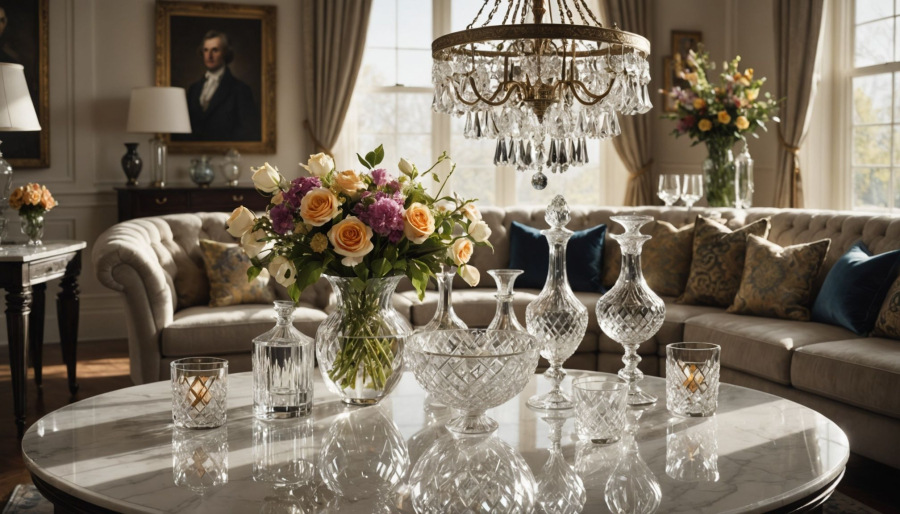
Once shaped, the crystal undergoes another transformation: hand-cutting. Using diamond-edged tools, skilled craftsmen carve deep, precise patterns that catch and scatter light in intricate ways. Unlike machine-cut surfaces, which follow rigid paths, hand-cut facets vary slightly in angle, creating a dynamic play of light - a phenomenon known as “fire.” This hand-cut precision isn’t just decorative; it’s what gives crystal its soul and sparkle.
Sound and weight: The physical presence
Then there’s the chime - that clear, lingering ring when a crystal glass is gently tapped. It’s not just pleasing to the ear; it’s confirmation of density and lead content, hallmarks of quality. High-lead crystal also has a satisfying heft, a tactile assurance of durability and refinement. These qualities don’t just elevate a toast - they transform everyday moments into rituals.
Elevating interior aesthetics with exclusive designs
Crystal isn’t meant to sit quietly in the background. At its best, it becomes the silent centerpiece of a room - a still point around which everything else orbits. A well-placed crystal vase, a sculptural bowl, or a luminaire with intricate faceting can redefine the energy of a space, adding warmth and luminosity without overwhelming modern simplicity.
Crystal as a focal point in modern decor
Contemporary interiors often rely on clean lines and neutral tones, making crystal the ideal counterpoint. Placed against matte finishes or raw textures like linen or unpolished wood, it introduces contrast without clutter. A single crystal chandelier over a minimalist dining table doesn’t dominate - it dignifies. It creates a dialogue between old-world elegance and present-day restraint.
Color mastery in premium glassware
One of the most difficult feats in crystalmaking is achieving deep, consistent color. True ruby red, emerald green, or sapphire blue require rare mineral additives and exacting temperature control. Even slight variations can dull the hue or introduce cloudiness. Top manufacturers guard their color recipes closely - some for generations - ensuring each piece carries the exact shade their legacy demands. This heritage savoir-faire turns color into identity.
Essential criteria for selecting a premium crystal brand
Not all crystal is created equal, and not all brands deliver on the promise of lasting value. To identify a true high-end manufacturer, look beyond the price tag. Focus instead on the markers of authenticity and excellence.
Historical pedigree and authenticity
Longevity matters. Brands with centuries of history haven’t survived by chance - they’ve adapted while preserving core techniques. Their archives often document original molds and patterns, ensuring today’s designs stay true to their roots.
Ethical and local production standards
European craftsmanship comes with unspoken guarantees: fair labor practices, environmental responsibility, and support for local artisanal communities. "Made in" isn’t just a label - it’s a pledge to quality and integrity.
Innovation within tradition
The best makers don’t freeze in time. They evolve - integrating dimmable LEDs into chandeliers, designing barware for modern entertaining, or creating modular lighting systems. This blend of old and new ensures relevance without sacrificing soul.
- Centuries of documented craftsmanship
- Presence of master artisans, such as Meilleurs Ouvriers de France
- Signature cutting patterns passed down through generations
- Collaborations with contemporary designers for limited editions
From tabletop to lighting: A holistic luxury experience
Luxury crystal isn’t confined to a single room or function. It extends from the dining table to the ceiling, creating a seamless sensory journey through the home. Each piece, whether used daily or displayed ceremonially, contributes to an overarching narrative of refinement.
Art de la table and the French touch
In formal dining, crystal glassware plays a psychological role. A finely cut wine glass doesn’t just hold the drink - it enhances the experience, amplifying aroma, color, and perceived taste. This is the essence of art de la table: using objects not just to serve, but to elevate.
Crystal lighting as an architectural element
Chandeliers and sconces do more than illuminate - they shape space. A grand crystal fixture draws the eye upward, altering the perceived height of a room. Modern versions now include dimmable LEDs, allowing for mood adjustments without sacrificing classic beauty.
Collectible objects and decorative arts
For collectors, crystal offers more than practicality. Limited edition sculptures, engraved paperweights, or commemorative vases become heirlooms - small masterpieces that carry personal and cultural significance.
Comparing crystal quality across the market
| Feature | Luxury Crystal | Mass-Produced Glass |
|---|---|---|
| Production Method | Mouth-blown and hand-cut by master artisans | Molded and machine-polished at scale |
| Light Refraction | High brilliance and "fire" from precise faceting | Muted sparkle due to shallow, uniform cuts |
| Sound Resonance | Clear, sustained ring indicating density | Dull "clink" from lower material quality |
| Durability/Repairability | Thicker walls; pieces can be re-polished | Thin, prone to chipping; rarely repairable |
This contrast isn’t just about appearance - it’s about longevity. Luxury crystal is designed to be passed down, not replaced. Each category in the table reflects a fundamental difference in intent: one is made to last, the other to sell.
Frequently Asked Questions
How does heritage crystal compare to modern crystalline?
Traditional crystal contains lead oxide, which increases density, clarity, and resonance. Modern crystalline is often lead-free, offering safer handling but less brilliance and weight. The trade-off is subtle but noticeable in both light performance and tactile feel - it’s a question of tradition versus practicality.
What should I expect regarding the cost of bespoke crystal pieces?
Prices reflect labor intensity and material quality. A hand-cut decanter may require over ten hours of work by specialized artisans. Bespoke commissions can range significantly depending on size, complexity, and customization, but they represent long-term value rather than immediate expense.
How do I maintain crystal clarity after years of use?
Hand-washing with mild detergent and lukewarm water is ideal. Avoid sudden temperature changes, which can cause micro-cracks. For regular sparkle, a soft cloth and occasional rinse in vinegar-water solution will remove mineral deposits without damaging the surface.
